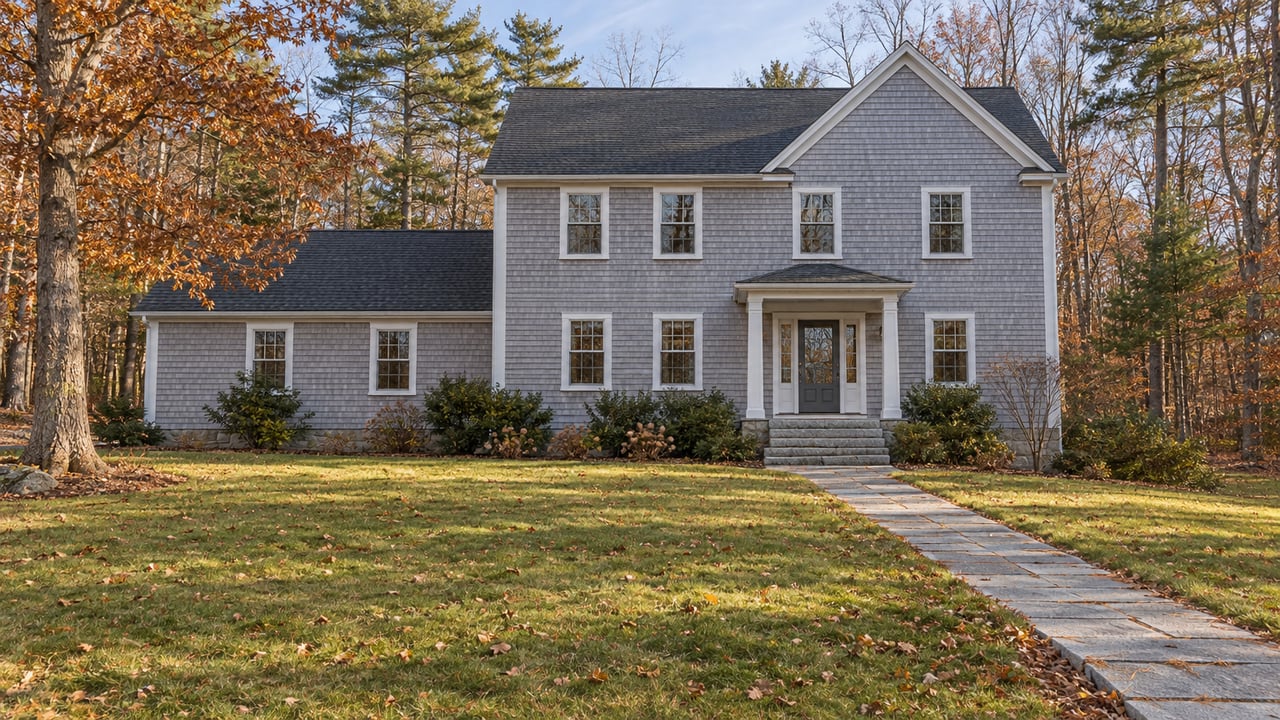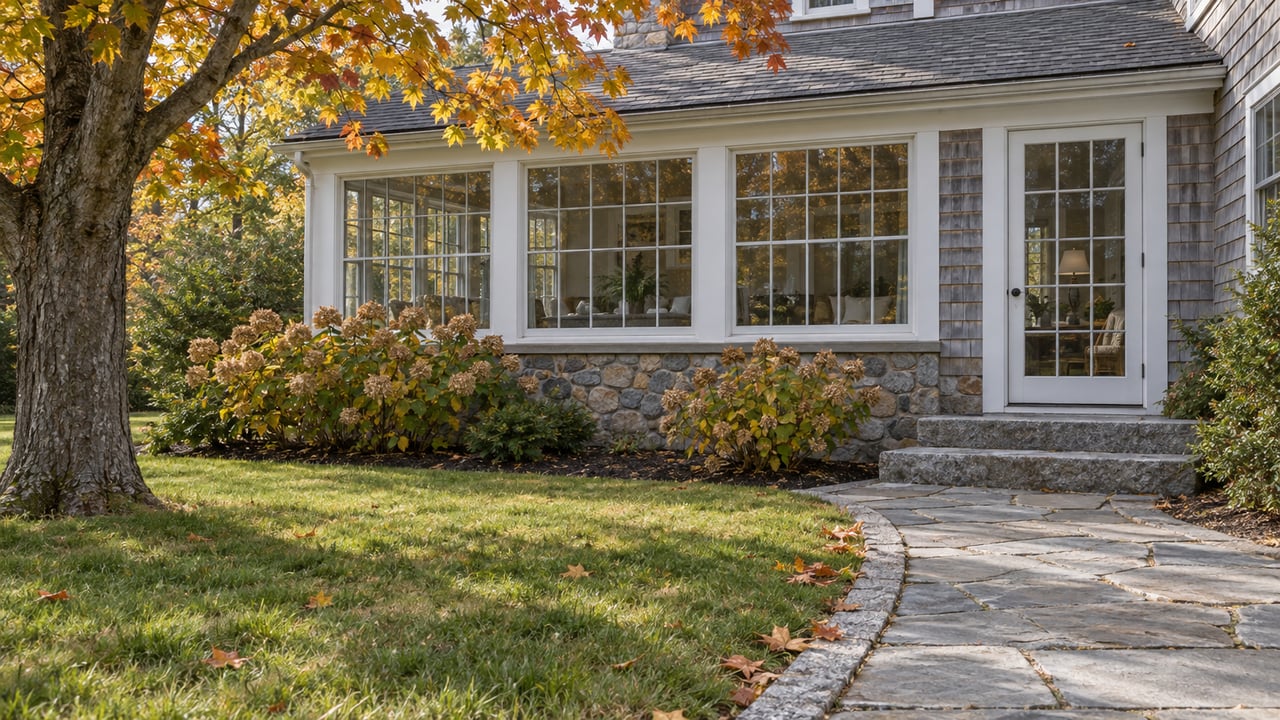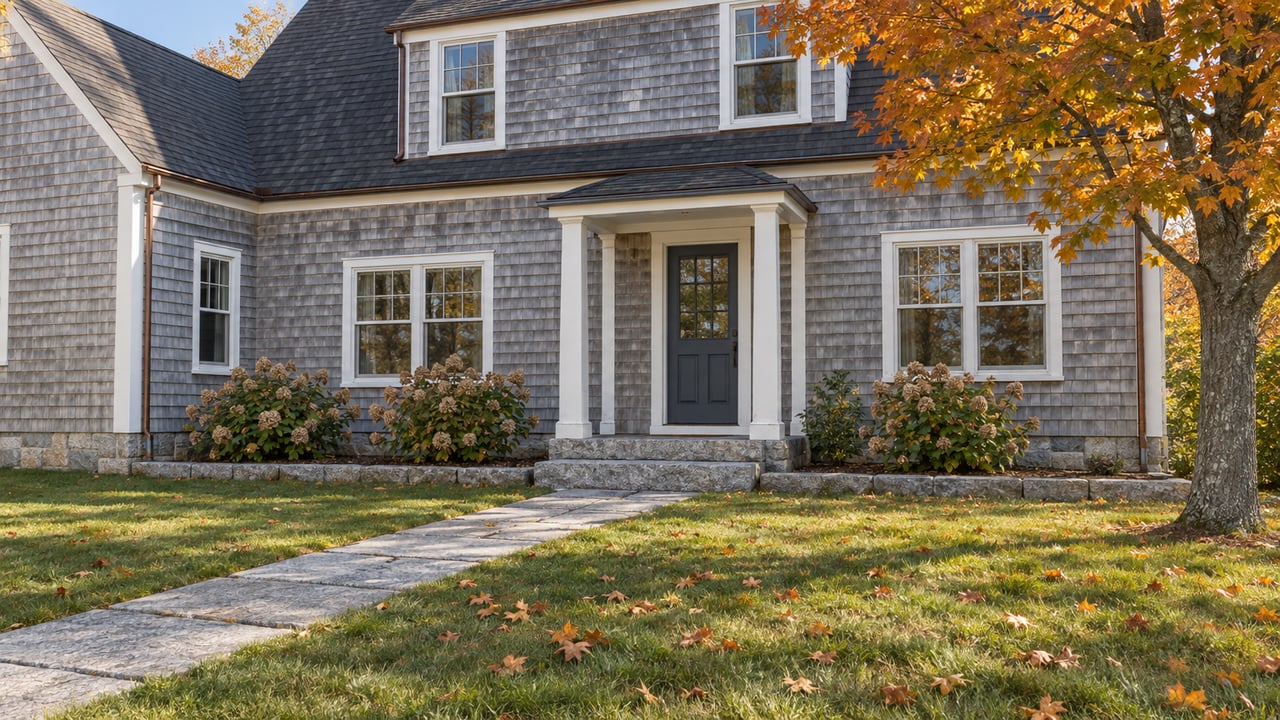
On August 3, 2026, the Brunswick Town Council voted to cap new housing in the town's designated rural zone at 20 units a year. Anyone who wants to build there now needs a rural growth permit. If you're looking at Brunswick because you want land, a wooded lot, or a newly built house outside the village, the price matters less than whether a permit is available in the year you want to break ground.
The cap is also only half of what's going on. The other half is a state law that bars towns from putting this kind of cap on their designated growth areas. Brunswick responded by making its growth area smaller. So new construction is being steered into a tighter in-town footprint, where state law requires more density. Rural Brunswick, meanwhile, will mostly change hands through homes that already exist.
The permit is the first thing to check now
The town planning staff's July 13, 2026 memo explains how the system works. A building permit for a new home in the Rural Area can only be issued if a Rural Growth Permit is available from that year's allocation. The ordinance text in the town's June draft sets out the rest:
- The allocation year runs from July 1 to June 30.
- Each new dwelling unit needs one permit, whatever its size or number of bedrooms.
- Permits left over at the end of a year expire and don't carry forward.
- If construction hasn't started within six months of a building permit being issued, the growth permit goes back into the pool.
The size of the cap kept shrinking on its way to the final vote. A June 5 staff memo proposed 32 permits a year, with 8 for single-family or two-family homes outside a subdivision and 24 for larger developments. The July 13 memo cut that to 24, split 6 and 18. At the August 3 meeting, the Council amended the total to 20, with 5 permits for single homes and 15 for subdivisions and other common-scheme development, then adopted the ordinance 8 to 1, with Chair Nathan MacDonald opposed. That leaves five permits a year for someone buying one rural lot to build one house.
The July draft also listed exemptions: accessory dwelling units, alterations to existing homes, affordable housing developments, family gift lots, and contract-zone projects. It proposed a one-year transition too. If no permits were left, up to 10 single homes could still go forward on lots bought before the ordinance passed, as long as the lot owner wasn't the subdivision's developer. On August 3, the Council voted to remove the contract-zoning exemption from the ordinance. Treat the other exemptions and the transition clause as staff proposals until you've checked them against the adopted text. For anyone who owned a rural lot before August 2026 and hasn't built yet, that transition clause matters more than anything else in the ordinance.
Twenty sits at the bottom of what the town normally builds
The planning memo says rural residential development in Brunswick "has typically ranged between 20 and 30 dwelling units per year," with activity especially strong from 2020 to 2022. Staff described the 24-permit draft as consistent with that history. The Council's 20 is the floor of the range. The more recent pace was higher. The June 5 memo put the average number of permits issued in rural districts over the past three years at 32. Compared with that three-year average, the cap is about 12 permits lower.
So in an average year the cap keeps rural construction near its slow years. In a busy year like 2020 to 2022, some projects would have to wait for the next July 1. Because unused permits expire and the yearly limit stays fixed, a strong year can't borrow from a slow one.
The cap comes on top of other changes. On April 21, 2026, the Council voted 9 to 0 to adopt amendments on subdivisions, open space, and conservation development. Staff wrote that those amendments require rural subdivisions to be designed as Conservation Developments, which get closer review than building on individual lots. Before any of this, the Council passed a 180-day emergency moratorium in November 2025 that paused new housing developments outside the growth zone while it considered a rural cap.
Why the cap stops at the growth line
The state law is LD 1829, approved June 20, 2025. It bars municipal rate-of-growth ordinances from limiting residential development in designated growth areas, except as the statute allows. Inside those areas, towns must allow at least four dwelling units per lot. On growth-area lots served by both public water and sewer, a town's minimum lot size can't exceed 5,000 square feet, and its density rules can't require more than 1,250 square feet per unit for the first four units.
That makes the location of the growth line very important. Inside it, Brunswick can't use a growth cap, and four units on a small lot have to be allowed. Outside it, the town can cap growth, and now it does.
Brunswick's 2025 comprehensive plan, "One Brunswick, Beautifully Balanced," was approved unanimously in December 2025. It shrinks the designated growth area and discourages development in rural parts of town. The town's planners told the Times Record that a smaller growth area lets the town keep local control over density in its neighborhoods. Principal planner Jimmy Dealaman explained the goal to the Council:
"One of the underpinnings of this comprehensive plan is to grow deliberately, so our public infrastructure such as water, sewer, roads and schools can be accommodated."
Put together, LD 1829 required more density inside growth areas, and Brunswick reduced the area where that requirement applies. Council Vice Chair Nathan MacDonald said at the time that he was concerned about how a smaller growth zone would affect affordable housing development, as reported by the Bangor Daily News.
Where new Brunswick homes are actually coming from
With rural growth limited, the recent and proposed projects are in town, and they tend to be small, multi-unit, or income-restricted. These are the named projects in the public record:
| Project | Location | What it is | Status in the record |
|---|---|---|---|
| Wilbur's Woods | McKeen Street | 21 standalone three-bedroom condos at $325,000 for households earning under $105,360 | Opened October 2025; all but one sold at the time of reporting |
| Wilbur's Woods next phase | McKeen Street | 18-unit apartment building for middle-income households | Planned; no start date published |
| 23 Thomas Point Road | Thomas Point Road | 14 affordable apartments in two buildings, six one-bedroom and eight two-bedroom | Approved by the Planning Board June 23, 2026, with conditions |
| Atlantic Pointe Phase 2 | Brunswick Landing | 64 one- and two-bedroom apartments, 15% designated affordable | Under construction as of July 2024; completion not confirmed |
| Downtown condo proposal | 53 and 69 Maine Street | 18 to 24 condos, possibly with parking and retail on the ground floor | Early-stage; construction forecast for late 2026 or 2027 |
Wilbur's Woods, developed by GreenMars Real Estate and Acadia Realty Partners, had sold all but one of its 21 homes by the time Mainebiz reported on the opening. Maine Public put its $325,000 price next to a $605,000 Cumberland County median at the time. Thomas Point Road still has steps to clear. Before a building permit is issued, the applicant has to show the project's funding is secured and submit a revised stormwater report.
None of these projects is a new single-family house on a few acres. Under the town's current direction, that kind of house is the one rural permits will ration.
How this shows up next to county prices
We couldn't find a reliable 2026 median sale price for Brunswick alone, so the closest current numbers are at the county level. The Maine Association of Realtors' September 10, 2026 report shows that from June through August 2026, Cumberland County had 1,085 single-family sales at a $621,500 median, up 0.89% from a year earlier. Sagadahoc County, just across the river, had 117 sales at a $471,000 median, up 7.05%.
These figures describe whole counties, not Brunswick. They do show that the in-town projects in the table are priced or restricted well below the county's typical sale. That's where Brunswick's new supply is concentrated, and buyers comparing towns should expect new options here to look more like Wilbur's Woods than like a newly built farmhouse on Route 123.
A comprehensive rewrite of Brunswick's zoning ordinance is scheduled to begin in fall 2026, so some of the in-town rules may change again.
FAQ
Does the cap affect buying an existing rural house?
The ordinance covers new dwelling units. In the June draft, repairing, replacing, reconstructing or altering an existing home is exempt. Buying a house that already exists doesn't require a rural growth permit under that language.
Can I add an ADU on a rural property?
Both the June draft and the July staff draft exempt accessory dwelling units from the permit requirement. Confirm against the adopted text before planning around it.
Is the rural subdivision moratorium still in place?
The original pause was set to expire May 16, 2026. The town's planning packets include the text of a 180-day extension covering rural projects with three or more new lots or units, but we couldn't confirm when or whether it was enacted. The town clerk's office can tell you its current status.
How do I know if a property is in the Rural Area?
The ordinance applies to land mapped as Rural Area on the Future Land Use Map in the comprehensive plan. That map is the one to check, not the current zoning district map.
If you're weighing a Brunswick lot and want to know before making an offer whether a growth permit is realistic this allocation year, that's a conversation worth having early. Shivam Kumar can help you work through permit timing, the growth-area map, and the in-town alternatives. Let's Connect.
This article is general information, not legal, tax or financial advice. Consult a qualified professional about your situation.