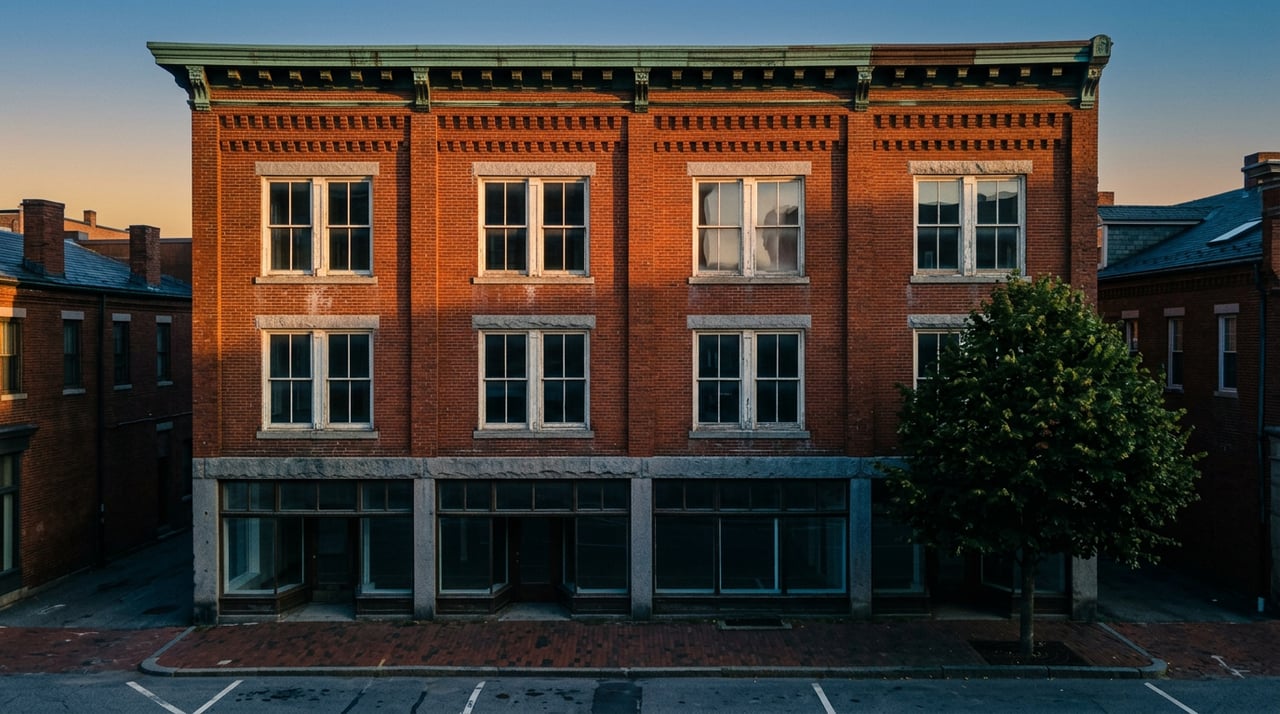
Stand on Ocean Street in Knightville on a Saturday morning and you will wait behind a stroller to get into Taco Trio. Walk three minutes to Mill Creek Park and there is a decent chance someone is skating on the pond in winter or reading on a bench in the sun the rest of the year. Drive fifteen minutes south to Willard Beach and the market tells a quieter story. Fewer offers. Softer prices. A neighborhood that, on paper, has everything a coastal Maine buyer says they want.
That gap is the story. In a market where "waterfront" is usually shorthand for "expensive and getting more so," South Portland's two water-adjacent neighborhoods, Willard and Ferry Village, have both posted year-over-year price declines. Knightville, which sits back from the harbor and doesn't have a beach to its name, is still climbing. If you're cross-shopping South Portland right now, that inversion matters more than the citywide median does.
The Number That Doesn't Fit the Story
South Portland's overall housing market stayed competitive through the summer. Over the three months ending August 2026, homes sold for a median of $535,000, down 2.6 percent from the same period the year before, and moved in about 22 days on average, faster than the 29 days it took the year prior.
That citywide number is the one most people see first, and it hides more than it reveals. Break the city into its named neighborhoods and the picture splits. Knightville's median over the trailing 12 months sits at $497,450, up 2 percent year over year. Willard, the beach neighborhood three miles from downtown Portland, shows a median of $692,500, down roughly 2 percent by one measure, and as much as 12 percent by another that tracks average rather than median pricing. That gap between the two ways of reading Willard's own numbers is itself a lesson: in a small neighborhood, one expensive teardown or one bidding war on a starter Cape Cod can swing the average even when the median barely moves. Ferry Village, South Portland's oldest neighborhood and its former retail corridor before the bridge, is down 13 percent year over year, the steepest pullback of the three.
Put plainly, the water is not currently paying for itself in South Portland the way it usually does along this coast.
What Rerouting 40,000 Cars a Day Actually Bought Knightville
Knightville's walkability did not happen by accident, and it did not happen recently. Before 1997, Ocean Street carried roughly 40,000 cars a day across the old Million Dollar Bridge, and most of those drivers had no idea people actually lived along that stretch. When the Casco Bay Bridge opened that year, the city rerouted that traffic around the neighborhood rather than through it, a decision documented in South Portland's own Knightville Mill Creek planning history. Overnight, a neighborhood built for cars passing through became one built for people staying put.
The decades since have layered on top of that decision. The city ran two phases of sidewalk and storm-drain work through Knightville in the early 2010s, repaving Cottage Road, Ocean Street, and Thomas Street and adding new streetlights and accessible curb cuts. A transit hub opened in 2014, designed to match the neighborhood's Village Commercial character rather than sit apart from it. None of that shows up on a listing sheet, but it shows up in how the neighborhood functions today: a place where city hall, the library, the post office, Mill Creek Park, and a run of local restaurants and shops all sit within a few minutes of each other, according to Down East Magazine's reporting on the neighborhood.
Ferry Village, the older waterfront district, carries the opposite legacy. It thrived when ferries crossed the harbor before any bridge existed, then declined when the WWII shipyards closed and changed the neighborhood's makeup. It has come back since, with the Ferry Village Neighborhood Conservation Association organizing since 1985 and helping establish the South Portland Land Trust, and it now claims its own creative-economy foothold. Mad Horse Theatre Company relocated there from Portland, and ceramic artist Abby Huntoon has run Sawyer Street Studios in the neighborhood since 1987. Huntoon put the appeal simply in Down East Magazine's piece on the city.
"I can spend days without leaving South Portland, without even leaving this neighborhood."
That is a genuine selling point. It is also a neighborhood whose comeback has been slower and whose current price trend reflects that.
What Your Money Buys, Block by Block
The three neighborhoods aren't just diverging in direction. They're different products.
| Neighborhood | Typical price range | Housing stock | What's nearby |
|---|---|---|---|
| Knightville | Condos roughly $375,000 to $525,000; single-family $450,000 to $725,000 | Mostly 1990s to 2000s builds in the southeast section, older bungalows elsewhere | Mill Creek Park, Taco Trio, Nonesuch Books, city hall, the library |
| Willard | Roughly $400,000 to $1 million, waterfront lots pushing toward the top | Bungalows, Cape Cods, and American Foursquares, many from 1950 or earlier | Willard Beach, Scratch Baking Co., Willard Scoops, Elsmere BBQ & Wood Grill, Fisherman's Point Park |
| Ferry Village | Softening, no reliable current median in the research | Mix of historic homes and cleared infill lots | Mad Horse Theatre, Sawyer Street Studios, proximity to Bug Light Park |
The pattern in that table is worth sitting with. Knightville's inventory skews newer and more turnover-friendly, condos alongside single-family homes built specifically for the walkable downtown the 1997 bridge project created. Willard's stock is older and more fixed, houses that have been in families for decades near a beach that isn't making more waterfront lots. Ferry Village has the most actual redevelopment activity, including cleared parcels on Dyer Street and Garford Court now marketed for anything from single-family builds to multi-unit residential, but redevelopment activity and price momentum aren't the same thing yet.
The Project Signaling Where the City's Betting Next
If you want a forward-looking read on which neighborhood the city expects to keep investing in, look at what's currently working its way through the planning process. A development group called Ocean's 170 LLC has proposed a seven-story, mixed-use building on a site now occupied by a skate shop, a bank, and a parking lot in Knightville, according to reporting in the Portland Press Herald. A zoning amendment let the developers add a sixth residential floor, bringing the total to 208 housing units, and the project was headed to the planning board for site-plan review. That is 208 units of new density aimed at a neighborhood that is already up in price, not at the beach.
That doesn't mean Willard or Ferry Village are bad bets. It means the near-term supply growth, and the amenities that come with it, are concentrating in the neighborhood without a beach.
Choosing Between the Water and the Walk
If you're deciding among these three neighborhoods, the honest advice depends on what you're actually optimizing for.
If daily walkability, a shorter commute to a growing restaurant and retail scene, and a neighborhood still adding housing stock matter more to you than beach frontage, Knightville's current price trend reflects real, ongoing investment rather than a temporary dip. If waking up near Willard Beach, Bug Light Park, or Spring Point Marina is the whole point of the move, a softer price trend right now may simply mean less competition for a lifestyle that isn't going anywhere. And if you're watching Ferry Village specifically for value, treat any single percentage you see with caution. It's a small, older neighborhood, and its number can move sharply on a handful of sales in either direction.
The one thing not to do is compare these neighborhoods using the citywide median. That number is real, but it describes South Portland in aggregate. It doesn't describe the block you're actually trying to buy on.
A Couple of Questions Worth Asking Before You Offer
Is a neighborhood's year-over-year number based on median price or average price? As Willard shows, the two can tell noticeably different stories in a small sample.
What's in the pipeline nearby? A project like the Knightville proposal changes parking, traffic patterns, and future inventory in ways worth understanding before you commit to a block.
Let's Connect
If you're weighing Knightville against Willard against Ferry Village, or trying to figure out what a specific price swing in one of these neighborhoods actually means for your offer, I'd rather walk you through the real comparables than let a citywide average make the call for you. Shivam Kumar works Southern Maine's coastal towns regularly, and South Portland's blocks are close enough together that the differences are worth a real conversation. Let's Connect.